


Keratoconus vs. Severe Dry Eye: How Custom Scleral Lenses Can Support Both at Once
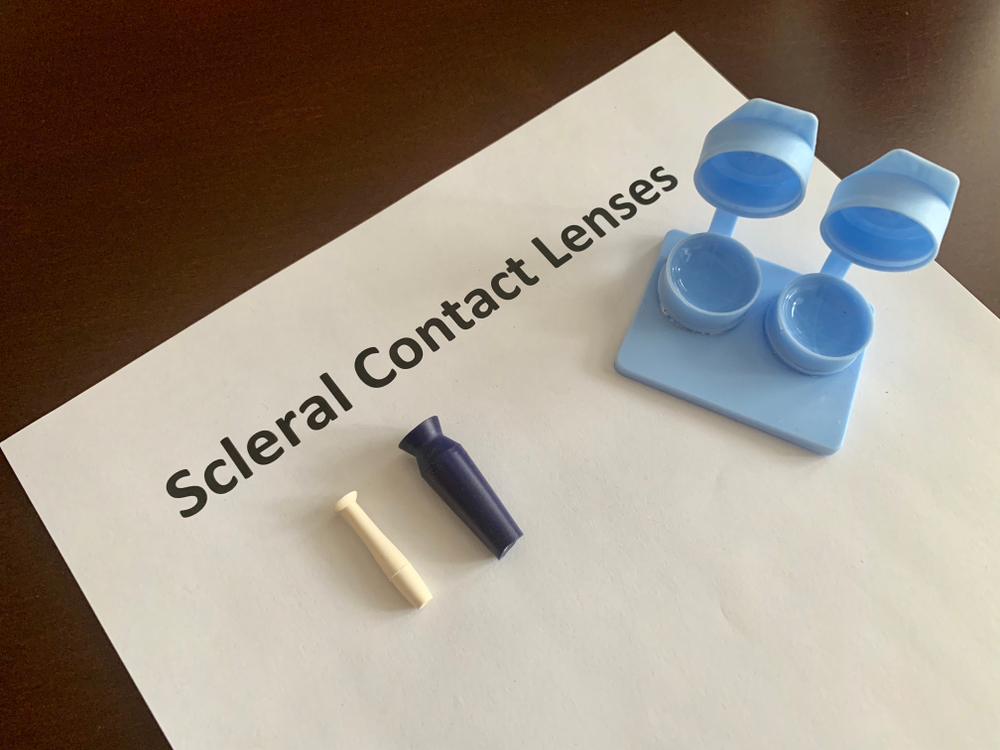
Keratoconus and severe dry eye create different challenges, but both may lead to unstable vision and discomfort with traditional contact lenses. At Lighthouse Vision, we fit custom scleral lenses in Milford, CT, for patients with irregular corneas, severe dryness, and complex ocular surface needs.
How Keratoconus Affects Vision
Keratoconus causes the cornea to thin and develop a more cone-like shape. Because light can no longer focus evenly, patients may experience blurred vision, glare, visual distortion, or frequent prescription changes. Glasses and standard soft contacts may not provide adequate correction as the condition progresses.
A custom scleral lens vaults over the cornea instead of resting directly on it. By creating a smooth optical surface over the irregular cornea, the lens can provide clearer, more stable vision for many patients with keratoconus.
How Severe Dry Eye Differs
Severe dry eye is related to an unstable or insufficient tear film. Symptoms may include burning, grittiness, redness, light sensitivity, fluctuating vision, and difficulty wearing standard contact lenses. While keratoconus primarily affects corneal shape, severe dry eye affects the health and comfort of the ocular surface.
Before insertion, a scleral lens is filled with preservative-free sterile saline. This creates a fluid reservoir between the lens and cornea, continuously bathing the corneal surface while the lens is worn. Scleral lenses may support comfort and visual stability, but they do not replace treatment for the underlying causes of dry eye disease.
One Lens Design, Two Important Benefits
Custom scleral lenses may help patients with keratoconus, severe dry eye, or both by:
- Creating a smoother optical surface over an irregular cornea
- Maintaining a fluid reservoir over the corneal surface
- Reducing direct contact between the lens and sensitive corneal tissue
- Providing a stable, customized fit for complex eyes
When Keratoconus and Dry Eye Occur Together
Some patients with keratoconus also struggle with significant dryness or contact lens intolerance. In these cases, conventional lenses may move excessively, feel uncomfortable, or fail to deliver consistent clarity. A properly fitted scleral lens can address the irregular corneal shape while also supporting the ocular surface with continuous hydration.
For Milford patients with both concerns, we also evaluate the tear film and meibomian glands. When appropriate, scleral lenses can be incorporated into a broader dry eye treatment plan based on the specific factors affecting eye comfort.
Why Custom Scleral Lens Fitting Matters
Scleral lenses are not one-size-fits-all contacts. The lens diameter, corneal clearance, edge alignment, prescription, and fluid reservoir must be carefully evaluated. Follow-up visits allow us to confirm that the lenses remain centered, comfortable, and supportive of healthy wear.
Who This Is (and Isn’t) For
Scleral lenses are not the first option for routine nearsightedness or astigmatism without corneal irregularity, and they are not a treatment for the underlying causes of dry eye disease on their own. They are most appropriate for keratoconus, other corneal irregularities, and severe dry eye that has not responded adequately to other treatment. If you have sudden eye pain, a rapid drop in vision, or new light sensitivity with redness, that needs prompt evaluation rather than a lens fitting; contact our office or seek urgent eye care right away.
Schedule a comprehensive eye exam with Lighthouse Vision to explore custom scleral lenses for your vision and comfort. Contact our office in Milford, CT, or by calling (203) 783-9632 to book an appointment today.
Written and reviewed by Stephen Dincher, OD. Last reviewed November 4, 2026.
Sources
Craig JP, Nichols KK, Akpek EK, et al. TFOS DEWS II Definition and Classification Report. Ocul Surf. 2017;15(3):276-283.
Qiu SX, Fadel D, Hui A. Scleral Lenses for Managing Dry Eye Disease in the Absence of Corneal Irregularities: What Is the Current Evidence? J Clin Med. 2024;13(13):3838.
Rathi VM, Mandathara PS, Dumpati S. Contact lens in keratoconus. Indian J Ophthalmol. 2013;61(8):410-415.



- Monday Closed
- Tuesday 9:00am - 6:00pm
- Wednesday 9:00am - 6:00pm
- Thursday 9:00am - 6:00pm
- Friday 9:00am - 5:30pm
- Saturday Closed
- Sunday Closed
© 2026 Lighthouse Vision. All rights Reserved. Accessibility Statement - Privacy Policy - Sitemap
Powered by:
